
Rajinikanth's Final Farewell to Bharathiraja
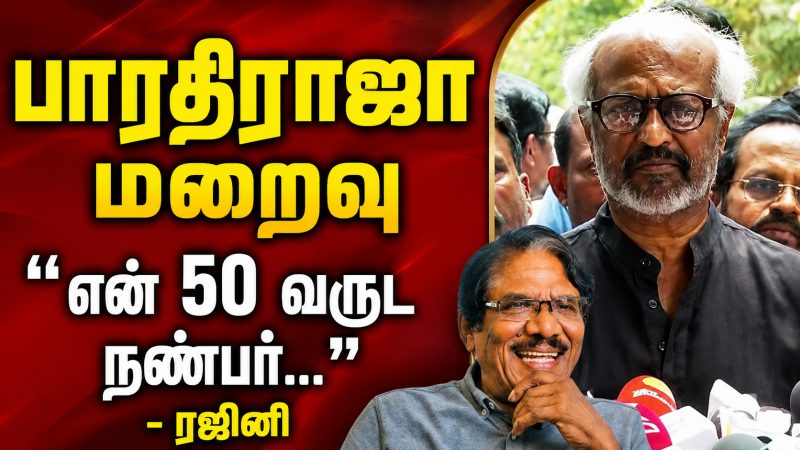
Tamil cinema lost one of its greatest filmmakers on June 10, 2026, with the passing of legendary director Bharathiraja at the age of 84. Revered as "Iyakkunar Imayam", Bharathiraja transformed Tamil cinema by taking stories out of studios and into the villages, creating a new cinematic language that influenced generations of filmmakers.
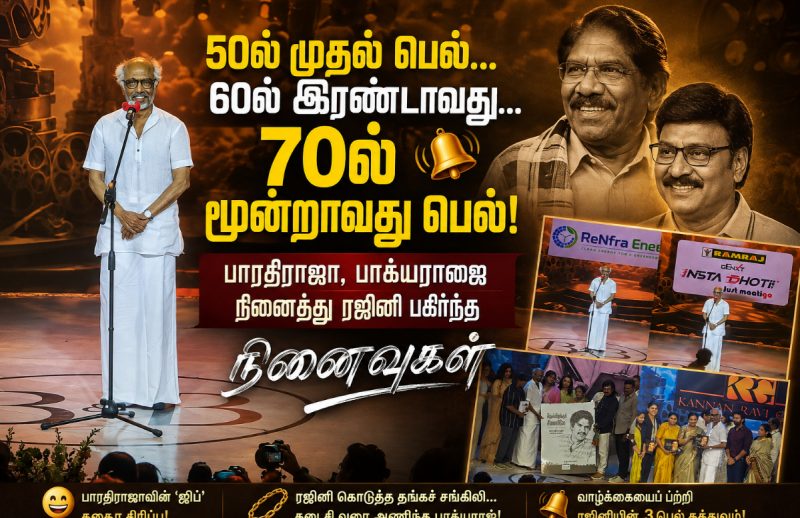
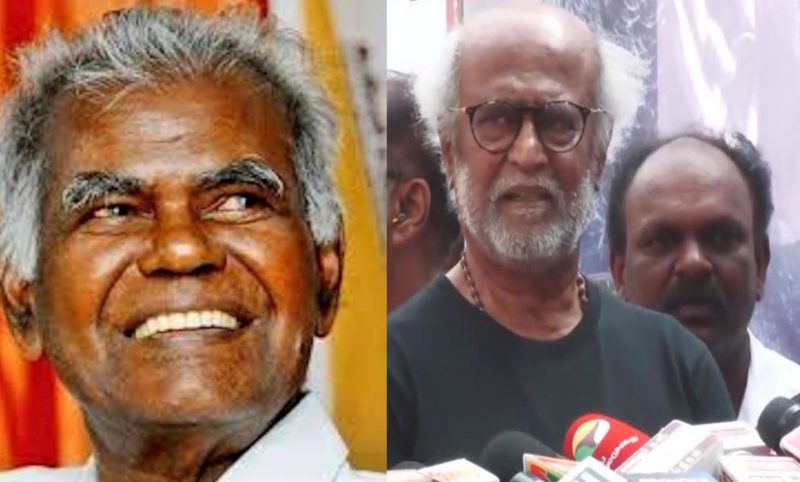
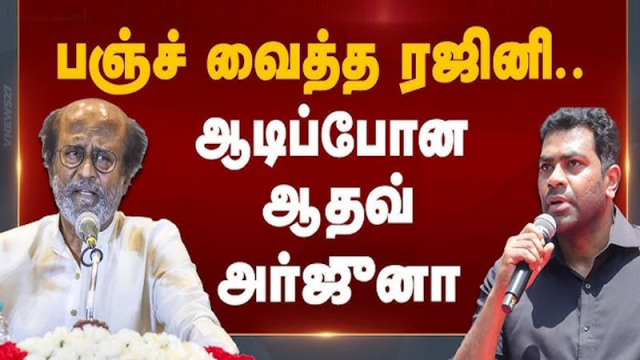
Among the many film personalities who arrived to pay their final respects, Superstar Rajinikanth's visit was one of the most emotional moments of the day. Visibly moved by the loss of his longtime friend, Rajinikanth reflected on a friendship that spanned nearly five decades. He praised Bharathiraja's immense contribution to South Indian cinema and recalled how the filmmaker always stood up for the welfare of artists and technicians. Rajinikanth also expressed regret that he was unable to meet Bharathiraja one final time before his passing.
Rajinikanth also remembered Bharathiraja's blunt honesty.
"He would openly criticize me," Rajinikanth recalled. "He would tell me, 'I like you as a person, but I don't like your acting.'" Rather than taking offence, Rajinikanth smiled while sharing the memory, describing Bharathiraja as a rare individual who always spoke his mind without fear.
The emotion in Rajinikanth's voice reflected more than the loss of a filmmaker. It was the loss of a friend, mentor, critic and well-wisher whose relationship with the Superstar had endured for almost 50 years.
The Beginning: "Idhu Eppadi Irukku?"
The Rajinikanth–Bharathiraja story began in 1977 with the landmark film 16 Vayathinile.
While the film introduced a new era of rural storytelling in Tamil cinema, it also gave Rajinikanth one of the earliest defining moments of his career. Playing the ruthless Parattai, Rajinikanth delivered the iconic dialogue, "Idhu Eppadi Irukku?", which later became one of the most celebrated punch dialogues in Tamil cinema history. Bharathiraja's casting of Rajinikanth in the memorable role helped establish the actor's screen presence during his formative years.
Though Rajinikanth would later become the biggest superstar in Indian cinema, he never forgot the filmmakers who shaped his early journey.
Reuniting for Kodi Parakuthu
More than a decade later, Bharathiraja and Rajinikanth reunited for Kodi Parakuthu.
The film generated enormous expectations. Bharathiraja produced the project while Rajinikanth was already at the peak of his stardom. Although the film did not achieve the blockbuster success many expected, it reinforced the friendship between the two men.
Commercial success or failure never became the foundation of their relationship.
The Cauvery Controversy That Tested Their Friendship
The most public disagreement between Rajinikanth and Bharathiraja emerged during the Cauvery water dispute in 2002.
Bharathiraja spearheaded a major agitation at Neyveli, where members of the Tamil film industry protested against supplying electricity from Tamil Nadu to Karnataka until the Cauvery issue was resolved. He became the face of the film industry's protest movement and urged the entire industry to participate.
Rajinikanth, however, disagreed with the approach.
Instead of joining the Neyveli protest, he organized a separate hunger strike in Chennai. Rajinikanth maintained that while he fully supported Tamil Nadu's rights in the Cauvery issue, he believed a different method of protest was necessary.
The decision created one of the biggest controversies in Tamil cinema at the time. Bharathiraja and several others openly criticized Rajinikanth's stand. The media portrayed it as a major rift between two towering personalities.
Yet Rajinikanth refused to respond with personal attacks.
His Chennai hunger strike attracted massive support from film personalities, political leaders and the public. Despite their differing approaches, Rajinikanth continued to respect Bharathiraja, while Bharathiraja never completely severed ties with the Superstar.
Critic, Friend and Well-Wisher
What made their relationship unique was Bharathiraja's willingness to criticize Rajinikanth openly.
Over the years, Bharathiraja commented on Rajinikanth's films, acting choices and even some of his public positions. In many instances, his remarks made headlines.
But Rajinikanth never reacted with anger.
Instead, he treated Bharathiraja's criticism as the opinion of a friend who had earned the right to speak honestly. Even after being criticized publicly on several occasions, Rajinikanth continued to support Bharathiraja whenever required.
That generosity was acknowledged by Bharathiraja himself in later years. The veteran filmmaker repeatedly praised Rajinikanth's humility and large-hearted nature, noting that the Superstar never carried grudges despite criticism directed at him.
Beyond Politics, Beyond Differences
Their friendship continued through changing political climates and ideological differences.
Rajinikanth attended functions associated with Bharathiraja's initiatives, including events connected to the Bharathiraja Film Institute. Bharathiraja, in turn, never hesitated to acknowledge Rajinikanth's phenomenal rise from a Bangalore bus conductor to one of India's most celebrated actors.
Both men often disagreed publicly, but they never allowed those disagreements to become personal.
In an era where friendships frequently collapse over politics and public criticism, Rajinikanth and Bharathiraja demonstrated that mutual respect could survive even the strongest differences of opinion.
That is why Rajinikanth's final farewell carried such emotion.
He was not simply paying tribute to the director who gave Tamil cinema classics.
He was bidding goodbye to a friend of fifty years — a man who helped shape his early career, challenged him when necessary, criticized him without fear, and stood as one of the most influential figures in his life journey.
With Bharathiraja's passing, Tamil cinema has lost a legendary filmmaker.
Rajinikanth has lost a friend.
.jpg)
.jpg)
.jpg)

.jpg)
.jpg)